
GST for IT Companies in India: What Software Businesses Need to Know
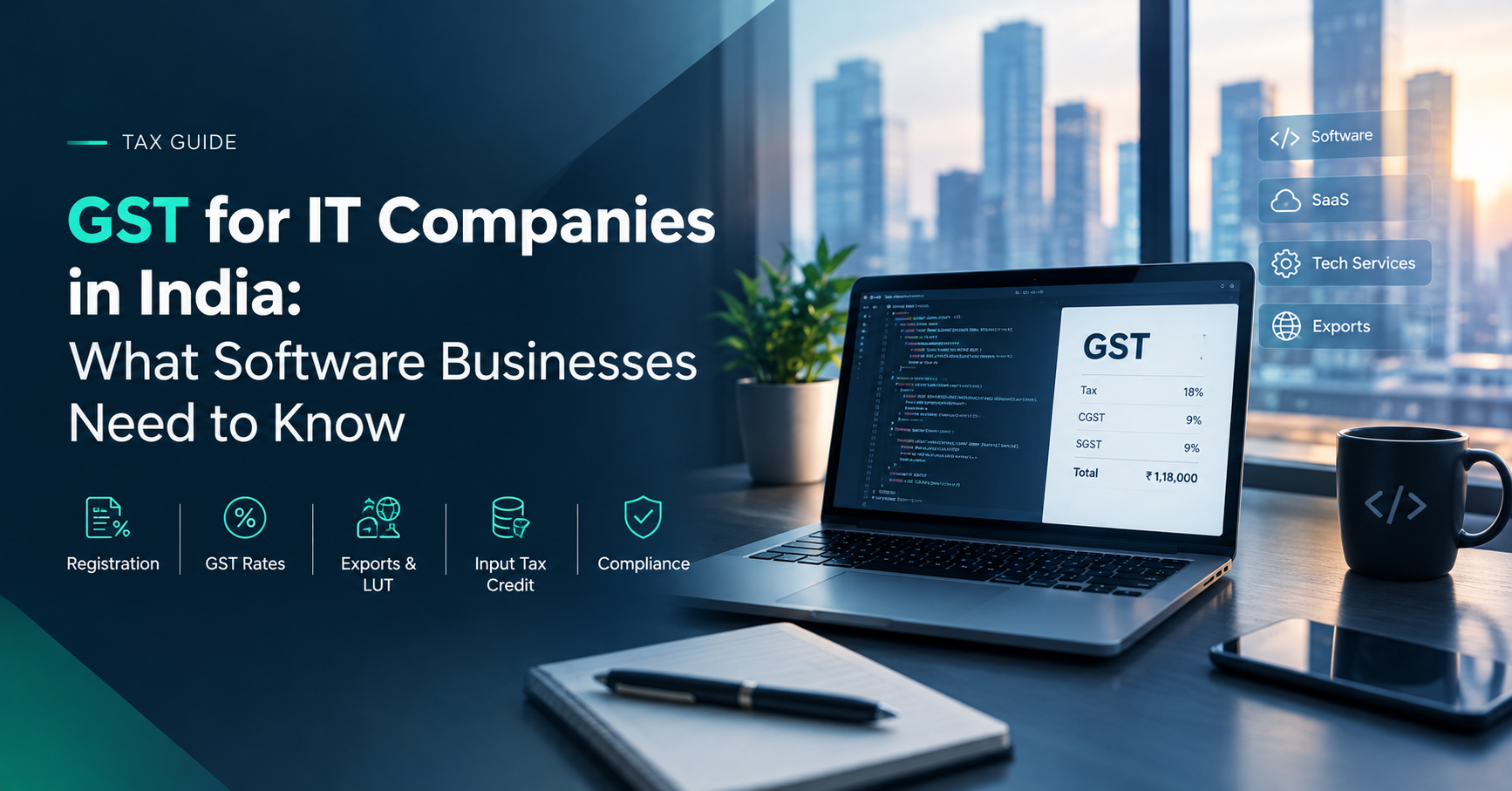
GST for IT Companies in India: What Software Businesses Need to Know
India’s IT sector has a unique GST landscape, especially for businesses providing software development, SaaS, consulting, cloud, and technology services. Understanding GST registration, invoicing, input tax credit and export rules is important for IT SMEs as they scale.
Is GST Applicable to IT Companies?
Yes. IT companies providing taxable services in India are generally covered under GST.
This can include:
- Software development and maintenance
- IT consulting
- SaaS and technology services
- Cloud and hosting services
- Technical support
- Website and application development
- IT-enabled services
The applicable GST treatment depends on the nature and classification of the service.
What Is the GST Rate for IT Services?
IT and IT-enabled services generally attract 18% GST, subject to the specific nature and classification of the service.
Businesses should identify the appropriate Service Accounting Code (SAC) while preparing invoices and filing GST returns.
Incorrect classification can result in incorrect tax treatment and compliance issues.
When Does an IT Company Need GST Registration?
GST registration requirements depend on factors such as turnover, nature of supply and the location of the business.
For service providers, the general registration threshold is ₹20 lakh, with a lower threshold applicable in specified special-category States.
However, turnover is not the only factor that determines registration. Certain transactions and compulsory-registration provisions can also affect whether an IT business needs GST registration.
IT companies should therefore evaluate their business model rather than relying only on the turnover threshold.
What About IT Companies Serving Foreign Clients?
This is one of the most important GST areas for Indian IT businesses.
Services provided to overseas customers may qualify as export of services if the prescribed conditions under GST law are satisfied.
Under Section 16 of the IGST Act, exports are treated as zero-rated supplies.
For a service to qualify as an export, key conditions include:
- Supplier is located in India
- Customer is located outside India
- Place of supply is outside India
- Payment is received in convertible foreign exchange, subject to applicable rules
- Supplier and recipient are not merely establishments of the same person
Therefore, simply receiving payment from a foreign client does not automatically make every transaction an export of service. The applicable conditions must be examined.
What Is LUT and Why Is It Important?
Eligible exporters can generally provide services under a Letter of Undertaking (LUT) without payment of IGST and subsequently claim eligible input tax credit refunds, subject to the applicable conditions.
This can be particularly relevant for IT companies working with clients in the US, UK, Europe, Australia and other overseas markets.
Proper documentation and reconciliation of export invoices, payments and GST records are important for avoiding unnecessary complications.
Can IT Companies Claim Input Tax Credit?
Eligible IT businesses can claim Input Tax Credit (ITC) on GST paid on qualifying business expenses, subject to the conditions and restrictions under GST law.
Depending on the business, expenses may include:
- Software and technology subscriptions
- Cloud services
- Professional services
- Office-related expenses
- Business equipment
- Other eligible inputs and input services
Maintaining proper invoices and reconciling purchase records with GST records is important for claiming eligible ITC.
Common GST Challenges for IT SMEs
As IT businesses grow, GST compliance can become more complicated because they may simultaneously have:
- Domestic and international clients
- Multiple service categories
- Foreign currency receipts
- Export transactions
- Software and cloud expenses
- Significant input tax credit
- Multiple registrations or locations
Some of the most common problem areas include incorrect place-of-supply treatment, export documentation, incorrect SAC classification and mismatches between books and GST returns.
GST Checklist for an IT Company
IT businesses should regularly review:
- GST registration status
- SAC classification
- Tax invoices
- Domestic vs export transactions
- Place of supply
- LUT status
- Input Tax Credit
- GSTR-1 and GSTR-3B
- Export documentation
- GST return reconciliation
A structured monthly review can help identify errors before they become larger compliance issues.
Conclusion
GST compliance for an IT company goes beyond simply adding 18% GST to an invoice. The correct treatment can depend on the type of service, customer location, place of supply and whether the transaction qualifies as an export.
For growing IT SMEs, establishing the right GST process early can make compliance easier as the business expands across domestic and international markets.
For expert guidance on this topic, contact your tax professional today.
Have Questions? We're Here to Help
Get expert advice from Consult Value Finserv Pvt Ltd. Reach out to discuss your requirements.